
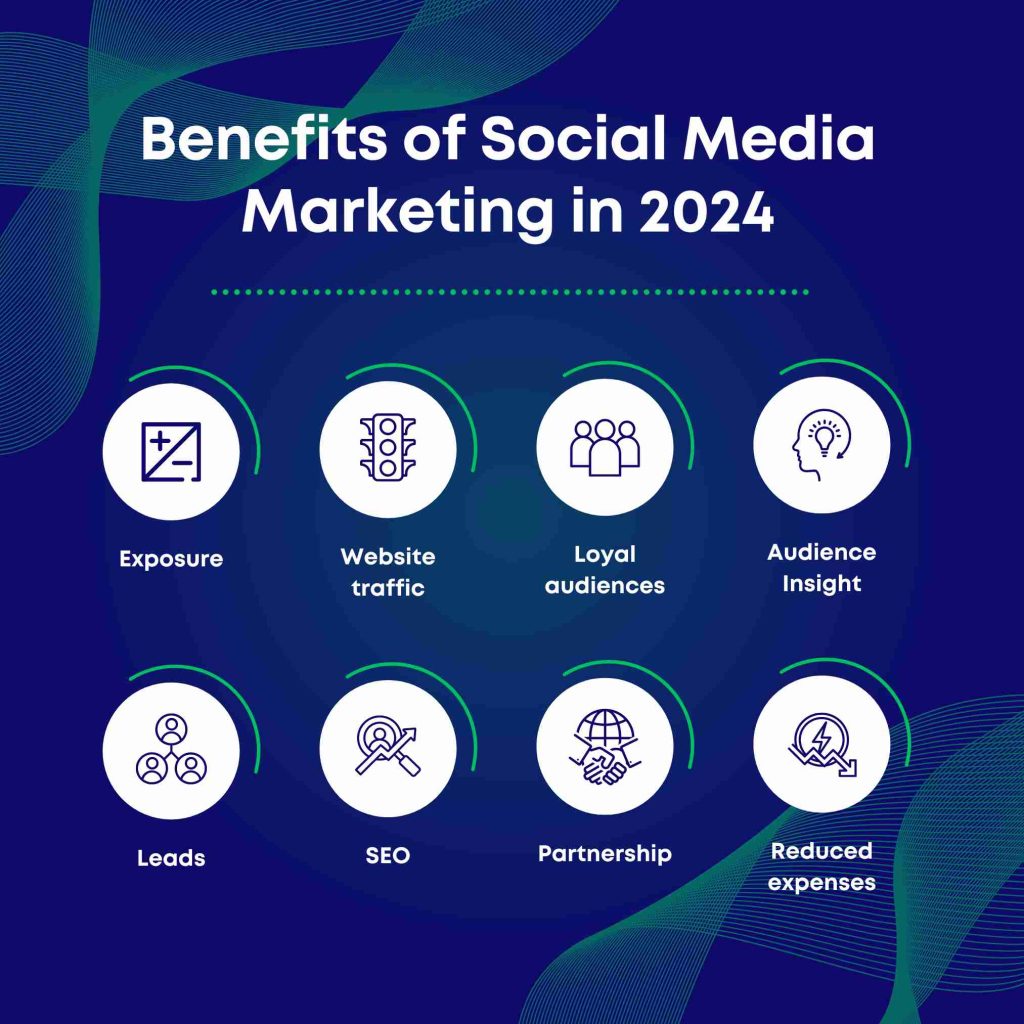
Benefits of Social Media Marketing 2024 – Social media marketing has revolutionized the way businesses interact with their customers and market their products and services. The power of platforms like Facebook, Instagram, Twitter, LinkedIn, and TikTok has transformed the marketing landscape, offering unprecedented opportunities for engagement, branding, and sales. This comprehensive article explores the myriad benefits of social media marketing, providing detailed explanations and insights into how businesses can leverage these platforms to achieve their goals.
Benefits of Social Media Marketing 2024: A Comprehensive Guide
Table of Contents: Benefits of Social Media Marketing 2024
-
Introduction to Social Media Marketing
-
Enhancing Brand Awareness
-
Increasing Website Traffic
-
Improving Search Engine Rankings
-
Higher Conversion Rates
-
Better Customer Satisfaction
-
Cost-Effective Marketing Strategy
-
Gain Marketplace Insights
-
Establishing Brand Authority and Loyalty
-
Improved Customer Engagement
-
Targeted Advertising
-
Competitive Advantage
-
Building Relationships and Networking
-
Real-Time Performance Analysis
-
Promoting Content and Products
-
Conclusion
1. Introduction to Social Media Marketing
Social media marketing refers to the use of social media platforms to promote products or services, engage with customers, and build a brand s presence online. This form of marketing leverages the power of platforms that facilitate social interaction and user-generated content. Unlike traditional marketing methods, social media marketing is highly interactive, allowing businesses to engage with their audience in real time and create more personal connections.
The Evolution of Social Media Marketing
- Social media marketing has evolved significantly since the early days of MySpace and Friendster. With the rise of Facebook in 2004, followed by Twitter, Instagram, LinkedIn, and newer platforms like TikTok, businesses have gained access to a vast and diverse audience. The interactive nature of these platforms has transformed marketing from a one-way communication model to a dynamic, two-way dialogue.
Importance in the Modern Business Landscape
- In today s digital age, having a social media presence is almost mandatory for businesses of all sizes. Consumers expect brands to have a presence on social media where they can easily access information, ask questions, and express their opinions. Social media marketing helps businesses to reach their target audience more effectively, build brand loyalty, and stay competitive in a crowded marketplace.
2. Enhancing Brand Awareness
One of the primary benefits of social media marketing is its ability to significantly boost brand awareness. Social media platforms provide a stage for brands to showcase their identity, values, and offerings to a global audience.
Broad Reach
- Social media platforms have billions of active users. For instance, Facebook alone has over 2.8 billion monthly active users. This vast user base means that businesses have the potential to reach a broad and diverse audience. By creating engaging content and participating in social media conversations, brands can increase their visibility and attract new followers.
Visual Branding
- Social media platforms, particularly Instagram and Pinterest, are highly visual. They allow businesses to showcase their products and services through high-quality images and videos, making their brand more recognizable. Visual content is often more engaging and shareable, helping brands to reach a wider audience.
Consistent Posting
- Regularly posting content on social media keeps your brand at the forefront of your audience s mind. Consistency helps in maintaining visibility and reminding your audience of your presence. Whether it s through daily posts, stories, or live sessions, regular engagement ensures that your brand remains relevant.
Hashtags and Trends
- Using trending hashtags and participating in popular conversations can boost your brand s visibility. Hashtags help categorize your content, making it easier for users to find your posts when searching for related topics. This can significantly enhance your brand s reach and introduce your products or services to a broader audience.
3. Increasing Website Traffic
Social media is a powerful driver of traffic to your website. By sharing links to your site and promoting your content, you can direct social media users to your web pages, increasing overall traffic.
Content Promotion
- Social media platforms are ideal for promoting blog posts, articles, and other content. Sharing links to your content on social media not only increases visibility but also drives traffic to your website. Engaging headlines, compelling descriptions, and appealing visuals can entice users to click on your links and visit your site.
Lead Generation
- Social media marketing is an effective tool for generating leads. Platforms like Facebook and LinkedIn offer sophisticated advertising options that allow businesses to capture leads directly through social media. By creating targeted ads and landing pages, businesses can collect user information and nurture these leads into customers.
Event Promotion
- Social media is an excellent platform for promoting events such as webinars, product launches, and conferences. By creating event pages and sharing them with your audience, you can drive traffic to your event registration pages and increase attendance.
Social Sharing
- Encouraging your audience to share your content on their own social media profiles can significantly increase traffic to your website. When users share your content, it reaches their followers, expanding your reach and driving more visitors to your site.
4. Improving Search Engine Rankings
While social media signals are not a direct ranking factor for search engines like Google, there is a correlation between social media activity and improved search engine rankings. Here s how social media marketing can indirectly boost your SEO efforts:
Increased Backlinks
- Social media can help generate backlinks to your website. When you share valuable content on social media, it increases the chances of other websites linking to your content. These backlinks are essential for improving your search engine rankings.
Enhanced Content Distribution
- Social media allows you to distribute your content to a wider audience, increasing its chances of being seen and shared. High-quality content that gains traction on social media can attract more visitors to your site, which can positively impact your SEO.
User Engagement Signals
- Engagement metrics such as likes, shares, and comments can indicate to search engines that your content is valuable and relevant. High levels of social engagement can contribute to your website s authority and improve its search engine ranking.
Brand Authority
- A strong social media presence can enhance your brand s authority and credibility. When users search for your brand online, a well-maintained social media presence can result in more branded search queries and improved search engine rankings.
5. Higher Conversion Rates
Social media marketing can lead to higher conversion rates compared to other marketing channels. The interactive and personal nature of social media allows businesses to build trust and establish relationships with their audience, which can translate into higher sales and conversions.
Personalized Interactions
- Social media platforms provide an opportunity for businesses to interact with their audience on a personal level. Responding to comments, answering questions, and engaging in conversations can help build trust and rapport with your audience, increasing the likelihood of conversions.
Retargeting Opportunities
- Social media platforms offer advanced retargeting options that allow businesses to target users who have previously interacted with their brand. Retargeting ads can remind users of products they viewed or added to their cart, encouraging them to complete their purchase.
User-Generated Content
- Encouraging your customers to share their experiences and create content related to your brand can be a powerful marketing tool. User-generated content serves as social proof and can influence the purchasing decisions of other users, leading to higher conversion rates.
Influencer Marketing
- Collaborating with influencers can help boost your conversion rates. Influencers have established trust and credibility with their followers, and their recommendations can significantly impact their audience s purchasing decisions.
6. Better Customer Satisfaction
Social media platforms provide a direct line of communication between businesses and their customers. This direct interaction can lead to improved customer satisfaction and loyalty.
Immediate Customer Support
- Social media allows businesses to provide immediate support to their customers. Responding promptly to customer inquiries and resolving issues quickly can enhance customer satisfaction and build loyalty. Platforms like Twitter and Facebook are commonly used for customer service, enabling businesses to address concerns in real time.
Building Relationships
- Social media enables businesses to build stronger relationships with their customers. Engaging with your audience through comments, messages, and posts shows that you value their input and are committed to their satisfaction. This can foster a sense of community and loyalty among your customers.
Transparency and Authenticity
- Social media provides a platform for businesses to be transparent and authentic with their audience. Sharing behind-the-scenes content, company updates, and addressing issues openly can build trust and credibility with your customers.
Personalized Experiences
- Social media allows businesses to provide personalized experiences for their customers. By leveraging data and insights from social media interactions, businesses can tailor their content and offers to meet the specific needs and preferences of their audience, enhancing overall satisfaction.
7. Cost-Effective Marketing Strategy
Social media marketing is one of the most cost-effective marketing strategies available. It offers a high return on investment (ROI) and allows businesses to reach a large audience with minimal investment.
Low Entry Cost
- Setting up social media profiles and posting content is free, making it accessible to businesses of all sizes. While paid advertising options are available, businesses can achieve significant results through organic social media efforts.
Flexible Budgeting
- Social media advertising offers flexible budgeting options, allowing businesses to control their spending and adjust their budgets based on performance. Whether you have a small budget or a large one, you can create effective social media campaigns that fit your financial constraints.
Measurable Results
- Social media platforms provide robust analytics tools that allow businesses to measure the performance of their campaigns. This data helps businesses optimize their strategies and allocate their budget more effectively, ensuring a higher ROI.
Targeted Advertising
- Social media advertising allows for highly targeted campaigns. Businesses can define their target audience based on demographics, interests, behaviors, and more, ensuring that their ads are seen by the most relevant users. This level of targeting increases the efficiency and effectiveness of social media marketing.
8. Gain Marketplace Insights
Social media platforms offer valuable insights into market trends, customer preferences, and competitor activities. These insights can inform your marketing strategies and help you stay ahead of the competition.
Audience Insights
- Social media platforms provide detailed analytics about your audience, including their demographics, interests, and behaviors. These insights can help you better understand your target market and tailor your content and campaigns to meet their needs.
Trend Monitoring
- Social media is a hub for the latest trends and conversations. By monitoring social media, businesses can stay informed about industry trends, emerging topics, and popular hashtags. This information can help you create timely and relevant content that resonates with your audience.
Competitor Analysis
- Social media allows you to keep an eye on your competitors and understand their strategies. Analyzing your competitors social media activities can provide insights into their strengths and weaknesses, helping you identify opportunities to differentiate your brand and gain a competitive edge.
Customer Feedback
- Social media is a valuable source of customer feedback. Monitoring comments, reviews, and messages can provide insights into customer satisfaction, preferences, and areas for improvement. This feedback can inform product development, customer service, and marketing strategies.
9. Establishing Brand Authority and Loyalty
A strong social media presence can help establish your brand as an authority in your industry and build customer loyalty.
Thought Leadership
- Sharing high-quality content, industry insights, and expert opinions on social media can position your brand as a thought leader in your field. Thought leadership builds credibility and trust with your audience, making them more likely to turn to your brand for information and solutions.
Consistent Branding
- Social media provides an opportunity to consistently communicate your brand s values, mission, and personality. Consistent branding helps reinforce your brand s identity and creates a cohesive experience for your audience.
Customer Loyalty Programs
- Social media is an effective platform for promoting customer loyalty programs. By offering exclusive discounts, rewards, and special offers to your social media followers, you can incentivize repeat purchases and build long-term customer loyalty.
Community Building
- Social media allows businesses to create a sense of community around their brand. By fostering a community of engaged followers, you can build strong relationships with your customers and encourage brand advocacy. Loyal customers are more likely to recommend your brand to others, helping you expand your reach.
10. Improved Customer Engagement
Social media platforms facilitate direct and meaningful interactions with your audience, leading to improved customer engagement.
Interactive Content
- Social media platforms support a variety of interactive content formats, including polls, quizzes, live videos, and stories. These interactive elements can engage your audience and encourage them to participate in conversations with your brand.
Real-Time Communication
- Social media allows for real-time communication with your audience. Whether it s responding to comments, participating in live chats, or addressing customer inquiries, real-time interactions create a more dynamic and engaging experience for your followers.
User-Generated Content
- Encouraging your audience to create and share content related to your brand can boost engagement. User-generated content, such as customer reviews, testimonials, and photos, adds authenticity to your brand and fosters a sense of community among your followers.
Contests and Giveaways
- Hosting contests and giveaways on social media can significantly increase engagement. These promotions encourage users to interact with your brand by liking, sharing, and commenting on your posts. Contests and giveaways can also help you attract new followers and increase your brand s visibility.
11. Targeted Advertising
Social media platforms offer advanced targeting options that allow businesses to reach their ideal audience with precision.
Demographic Targeting
- Social media advertising allows you to target users based on demographic factors such as age, gender, location, and education level. This ensures that your ads are seen by the most relevant audience, increasing the likelihood of engagement and conversions.
Interest and Behavior Targeting
- Platforms like Facebook and Instagram offer interest and behavior targeting options, allowing you to reach users based on their hobbies, interests, and online behaviors. This level of targeting ensures that your ads resonate with users who are more likely to be interested in your products or services.
Lookalike Audiences
- Social media platforms allow you to create lookalike audiences based on your existing customer data. Lookalike audiences are users who share similar characteristics and behaviors with your current customers, making them more likely to engage with your brand.
Retargeting
- Retargeting allows you to reach users who have previously interacted with your brand. By displaying ads to users who have visited your website or engaged with your social media profiles, you can remind them of your products and encourage them to complete their purchase.
12. Competitive Advantage
Social media marketing can provide a competitive advantage by helping you differentiate your brand and stay ahead of industry trends.
Unique Brand Voice
- Developing a unique brand voice on social media can set you apart from your competitors. A distinctive and consistent brand voice helps create a memorable impression and fosters a stronger connection with your audience.
Early Adoption of Trends
- Social media is often where new trends and innovations emerge. By staying active on social media, you can identify and adopt new trends early, positioning your brand as a forward-thinking leader in your industry.
Direct Customer Feedback
- Social media provides immediate access to customer feedback. By listening to your audience and addressing their concerns, you can improve your products and services more quickly than competitors who rely solely on traditional feedback channels.
Real-Time Marketing
- Social media enables real-time marketing, allowing you to capitalize on current events, trending topics, and cultural moments. Real-time marketing can create buzz around your brand and engage your audience in timely and relevant ways.
13. Building Relationships and Networking
Social media platforms facilitate relationship-building and networking opportunities that can benefit your business.
Connecting with Customers
- Social media allows businesses to connect with their customers on a personal level. By engaging in conversations, responding to comments, and showing appreciation for your customers, you can build strong relationships that foster loyalty and trust.
Industry Connections
- Social media provides opportunities to connect with other businesses, industry leaders, and influencers. Networking with industry peers can lead to collaborations, partnerships, and new business opportunities.
Influencer Partnerships
- Collaborating with influencers can expand your reach and enhance your brand s credibility. Influencers have established relationships with their followers, and their endorsements can significantly impact your brand s visibility and reputation.
Employee Advocacy
- Encouraging your employees to share content and advocate for your brand on social media can amplify your reach and build a positive brand image. Employee advocacy programs can also boost employee engagement and morale.
14. Real-Time Performance Analysis
Social media platforms offer robust analytics tools that provide real-time performance data, allowing businesses to measure the effectiveness of their campaigns and make data-driven decisions.
Engagement Metrics
- Social media analytics tools provide detailed information about engagement metrics such as likes, shares, comments, and clicks. These metrics help businesses understand how their content is performing and identify which types of content resonate most with their audience.
Audience Insights
- Social media platforms offer insights into your audience s demographics, interests, and behaviors. This data can inform your content strategy and help you create more targeted and relevant campaigns.
Conversion Tracking
- Social media advertising platforms provide conversion tracking capabilities, allowing businesses to measure the impact of their ads on sales, leads, and other conversions. This data helps businesses optimize their ad campaigns and improve ROI.
A/B Testing
- Social media platforms support A/B testing, allowing businesses to test different versions of their ads and content to determine which performs best. A/B testing helps businesses refine their strategies and achieve better results.
15. Promoting Content and Products
Social media platforms are powerful channels for promoting your content and products to a wide audience.
Content Distribution
- Social media is an effective channel for distributing your content, whether it s blog posts, videos, infographics, or other types of content.
- Sharing your content on social media increases its visibility and can drive traffic to your website.
Product Launches
- Social media is an ideal platform for announcing and promoting new products. By creating buzz around your product launches through teasers, countdowns, and live events, you can generate excitement and anticipation among your audience.
Influencer Endorsements
- Collaborating with influencers to promote your products can significantly boost your reach and credibility. Influencers can create authentic and engaging content that highlights the benefits of your products and encourages their followers to make a purchase.
Customer Reviews and Testimonials
- Sharing customer reviews and testimonials on social media can serve as powerful social proof. Positive reviews and testimonials from satisfied customers can influence the purchasing decisions of potential customers and enhance your brand s reputation.
16. Conclusion: Benefits of Social Media Marketing 2024
Social media marketing offers a wide range of benefits for businesses of all sizes. From enhancing brand awareness and increasing website traffic to improving customer satisfaction and driving higher conversion rates, social media platforms provide valuable opportunities to connect with your audience and achieve your marketing goals.
By leveraging the power of social media, businesses can build strong relationships with their customers, gain valuable insights, and stay ahead of the competition. With its cost-effective nature and advanced targeting options, social media marketing is an essential component of any modern marketing strategy.
As the digital landscape continues to evolve, social media marketing will remain a crucial tool for businesses looking to thrive in an increasingly connected world. Embracing social media marketing and staying up-to-date with the latest trends and best practices can help businesses maximize their potential and achieve long-term success.


